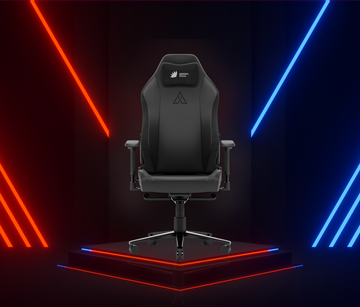

High Back vs Mid Back Office Chair - Which is Better?

High Back vs Mid Back Office Chair — Which One Should You Buy?
Walk into any office chair listing and you will see two terms repeated constantly: "high back" and "mid back." They sound like minor variations, but the difference between these two backrest types affects everything from neck pain to how the chair fits in your room. Choosing the wrong one means either paying for support you cannot use, or missing support you desperately need.
This guide breaks down exactly what each type covers on your body, when one is clearly better than the other, and which Green Soul office chairs deliver the best version of each. By the end, you will know exactly which backrest height is right for your body, your hours, and your workspace.
High Back vs Mid Back — What Each Actually Covers
The distinction is straightforward, but its impact on comfort is bigger than most people expect.
🔵 High Back Chair
- Backrest height: Extends from your lumbar (lower back) up through your mid-back, shoulders, and neck — typically 55–70 cm tall
- Includes headrest: Yes — cushioned or adjustable
- Body coverage: Full spine support from pelvis to skull
- Supports: Lower back, mid-back, upper back, shoulders, neck, and head
- Looks like: Taller, more substantial chair with visible headrest above shoulder line
🟢 Mid Back Chair
- Backrest height: Extends from your lumbar up to your shoulder blades — typically 40–50 cm tall
- Includes headrest: No
- Body coverage: Lower back and mid-back support only
- Supports: Lower back and mid-back — shoulders, neck, and head are unsupported
- Looks like: Shorter, more compact chair that ends below your shoulder line
The simplest way to think about it: A high back chair supports your entire spine including your neck. A mid back chair supports your lower and middle back only — your neck muscles do all the work above shoulder level on their own. For short sessions this is fine. For 8+ hours, the neck gets tired.
When to Choose a High Back Office Chair
High back is the right choice in the majority of desk-work scenarios. Here are five specific situations where it is clearly the better option.
✅ Choose High Back If…
When to Choose a Mid Back Office Chair
Mid back chairs are not "worse" — they are designed for different situations. Here are four scenarios where a mid back is actually the smarter choice.
✅ Choose Mid Back If…
Side-by-Side Comparison — High Back vs Mid Back
| Criteria | High Back | Mid Back |
|---|---|---|
| Spine coverage | Full — lumbar to neck | Partial — lumbar to mid-back |
| Headrest | Yes (cushioned or adjustable) | No |
| Neck support | ✅ Supported | ❌ Unsupported |
| Shoulder support | ✅ Supported | ❌ Unsupported |
| Ideal daily hours | 6–12 hours | 2–6 hours |
| Recline comfort | Excellent (head supported) | Limited (head hangs back) |
| Back pain relief | ⭐⭐⭐⭐⭐ Full spine | ⭐⭐⭐ Lower/mid back only |
| Room footprint | Larger (taller profile) | Compact (shorter profile) ✓ |
| Under-desk clearance | Headrest may protrude | Tucks under easily ✓ |
| Best height range | 5'4" to 6'4" | 4'10" to 5'8" ✓ |
| Video call appearance | Professional, substantial | Low-profile, room looks bigger |
| Price range (Green Soul) | ₹6,490 – ₹26,990 | ₹7,590 |
Important nuance: "High back" does not automatically mean "better." A well-made mid back chair with adjustable lumbar (like the Jupiter Superb MB) will always outperform a cheap high back chair with no lumbar support. Backrest height matters, but lumbar quality matters more. Do not sacrifice lumbar support to get a headrest.
Best High Back Office Chairs
The Green Soul range has 15 high back models. Here are the top picks across different needs and budgets.
⭐ Best All-Rounder — Jupiter Superb High Back — ₹8,190
The most popular high back chair in the Green Soul range. Spine-shaped breathable mesh backrest, adjustable lumbar, cushioned headrest, 2D PU-padded armrests, and high-density moulded foam seat. Handles 8–10 hours daily with ease. The headrest is positioned at a comfortable height for users 5'0" to 6'2".
Choose this if: You want a reliable, well-priced high back chair for daily desk work. See our full review in the best office chair guide.
Best Budget High Back — Zodiac Lite — ₹6,490
The most affordable high back mesh chair worth buying. Full back coverage from lumbar to neck, breathable mesh, moulded foam seat, and tilt mechanism. The trade-off at this price: fixed lumbar and fixed armrests. But for the backrest height and build quality, nothing else under ₹7,000 comes close.
Choose this if: You need a high back chair on the tightest possible budget. Full budget guide here.
Best for Back Pain — Zodiac Pro — ₹10,990
High back mesh frame with Suspended AeroFlo Lumbar that floats and adapts to your spine position. 4D armrests, seat slider, multi-angle recline with lock, and adjustable headrest. The combination of full spine coverage plus suspended lumbar makes this the most back-friendly high back chair under ₹12,000.
Choose this if: You have existing back or neck pain and need a high back chair with advanced lumbar support. Detailed review in our back pain guide.
Best for Broad Shoulders — Leo Superb — ₹10,990
Most high back chairs have wide backrests that cup your shoulders — comfortable for average frames, but confining for broad-shouldered users. The Leo Superb flips this with a narrow backrest that deliberately frees shoulder movement, while still extending high enough for full spine and neck support. Auto weight-sensing recline, 2D armrests, and 2-way adjustable headrest.
Choose this if: You find standard high back chairs too restrictive around the shoulders. Also available as the Leo (₹8,990) with synchro-tilt instead of auto-recline.
Best Dual-Panel High Back — Orion — ₹9,990
The Orion splits its high back into two panels — a fixed upper for spine and shoulder stability, and a concave lower that cradles the lumbar dynamically. This encourages micro-movements while keeping the upper body well-supported. Intelli-Adapt auto-recline, 3D armrests, seat slider, and 2-way adjustable headrest. The most feature-rich high back chair under ₹10,000.
Choose this if: You want a high back chair that moves with you rather than locking you in one position.
Best Design-Led High Back — Cosmos Pro — ₹12,990
A minimalist bolt-free frame that does not look like a typical office chair. High back coverage with cushioned headrest, adjustable lumbar, 4D armrests, 5cm seat slider, Intelli-Adapt recline, and aluminium wheelbase. Available in Steel Grey, Sage Green, and Aqua Blue. Made from recycled plastic. 5-year warranty.
Choose this if: You want a high back chair that looks like designer furniture — ideal for modern home offices where aesthetics matter.
Best Flagship High Back — Icon Pro — ₹26,990
The Green Soul flagship. ErgoLift Back Technology with targeted adaptive lumbar, premium Wired Korean Mesh, Intelli-Adapt recline, 2D adjustable headrest (height + tilt), 4D armrests, and a 5-year warranty. The 2D headrest is the most adjustable in the range — you can fine-tune both height and angle for precise neck alignment.
Choose this if: You want the absolute best high back experience and are willing to invest in long-term spinal health.
Best Mid Back Office Chairs
Green Soul currently offers two dedicated mid back models. Both share the same build quality as their high back counterparts — the only difference is backrest height and the absence of a headrest.
⭐ Best Mid Back Overall — Jupiter Superb Mid Back — ₹7,590
The mid back version of the best-selling Jupiter Superb. Spine-shaped breathable mesh, adjustable lumbar support, 2D PU-padded armrests, and moulded foam seat — identical materials and build to the High Back, just shorter. The backrest ends at shoulder-blade level, giving full lumbar and mid-back support without the headrest.
Choose this if: You work under 6 hours daily, are shorter than 5'4", or need a compact chair for a small desk in a small room.
Best Dynamic Mid-Profile — Orbit — ₹7,990
While technically a high back frame, the Orbit's dual-panel design and concave lumbar cradle create a support profile that behaves more like an advanced mid back — the upper panel provides stability without the traditional headrest bulk. Its low-profile aesthetic, ultra-quiet castors, and screwless design make it feel more compact than typical high back chairs. An excellent hybrid option if you are torn between the two categories.
Choose this if: You want the lumbar benefits of a high back in a package that looks and feels as compact as a mid back.
What About Headrests? Types and What They Do
The headrest is the primary feature that separates high back from mid back. But not all headrests are created equal. Here is what to look for.
Fixed Cushioned Headrest
- Padded cushion attached at a fixed height
- Comfortable for users who fit the default height range
- Cannot adjust if headrest sits too high or low for you
- Found on: Jupiter Superb HB, Jupiter Pro Intelli-Adapt
Adjustable Headrest (1-way or 2-way)
- Height-adjustable (1-way) or height + tilt (2-way)
- Fits a wider range of body types and sitting positions
- 2-way tilt is especially useful for reclining positions
- Found on: Zodiac Pro, Orion, Astra, Icon Pro, Galaxy (10-point lock)
Headrest tip: A headrest is not meant for constant contact while typing. It is meant for rest — during phone calls, while thinking, or when you recline. If your headrest pushes your head forward during active typing, it is either too far forward (adjust the tilt) or too low (adjust the height). If neither fixes it, you may be a better fit for a mid back chair.
How Your Height and Body Type Affect the Choice
Your body dimensions matter more than most buying guides acknowledge. Here is a practical framework.
| Your Height | Recommended Type | Best Model | Why |
|---|---|---|---|
| Under 5'2" | Mid Back | Jupiter Superb MB | Most high back headrests sit too high, pushing head forward |
| 5'2" – 5'6" | Either works | Jupiter Superb HB or MB | HB works if headrest aligns; MB if it does not |
| 5'6" – 6'0" | High Back ✓ | Jupiter Superb HB | Sweet spot — headrest aligns well, full body support |
| 6'0" – 6'4" | High Back (with seat slider) | Zodiac Pro or Jupiter Pro IA | Seat slider adjusts depth for longer thighs |
| Broad shoulders | High Back (narrow frame) | Leo Superb | Narrow backrest frees shoulders unlike standard HB chairs |
| Heavy build (100+ kg) | High Back (120 kg capacity) | Zodiac Pro or Icon Pro | 120 kg rated frame, reinforced base, heavy-duty gas lift |
The height test: When you sit in a high back chair with your hips pushed fully back, the headrest should touch the base of your skull — not the top of your head, and not behind your neck. If it pushes your chin toward your chest, the headrest is too low. If it hovers above your head, you may need a taller model or an adjustable-height headrest.
Frequently Asked Questions
Q: Is a high back office chair better than a mid back?
A: For 6+ hours of daily desk work, yes — a high back provides full spine support including neck and shoulders, reducing fatigue. For shorter sessions (under 6 hours), compact spaces, or shorter users (under 5'4"), a mid back chair can be equally effective while taking up less room and costing less.
Q: Can I add a headrest to a mid back chair?
A: Some third-party detachable headrests exist, but they rarely align properly with the chair's backrest curve. The attachment points are not designed for the specific frame, which means the headrest often wobbles, sits at the wrong height, or pushes your head forward. If you need neck support, buying a purpose-built high back chair is more effective and comfortable than retrofitting a mid back.
Q: Which is better for back pain — high back or mid back?
A: High back is better for overall back pain because it supports the full spine. However, lower-back pain specifically is addressed by lumbar support — which both types offer. If your pain is concentrated in the lower back only, a mid back chair with good adjustable lumbar (like the Jupiter Superb MB) can be sufficient. For neck and upper-back pain, high back is essential.
Q: Do mid back chairs cost less than high back?
A: Generally yes, because less material is used. The Jupiter Superb Mid Back is ₹7,590 compared to the High Back at ₹8,190 — a ₹600 difference for the same build quality. Whether that saving is worth losing neck support depends on your daily hours and body type.
Q: I am 5'3" — should I get high back or mid back?
A: You are in the transition zone. Try to check whether a high back headrest aligns with the base of your skull when seated. If it does, high back gives you more support. If it pushes your head forward, go mid back. The Jupiter Superb MB (₹7,590) is the safest mid back pick for your height. If you want high back, the Zodiac Lite has a headrest positioned slightly lower than average, which works better for shorter users.
Q: Which type is better for video calls from home?
A: Mid back chairs show more of your background, making rooms look larger on camera. High back chairs look more "executive" and professional but can dominate the frame in small rooms. For WFH video calls, both work — choose based on comfort needs first, aesthetics second. Our WFH chair guide covers video call aesthetics in detail.
Q: Are high back chairs heavier or harder to move?
A: Marginally heavier (1–2 kg more), but all Green Soul chairs use smooth PU castors that roll easily on any surface. The weight difference is negligible in practice. Assembly time is similar for both types (15–30 minutes).
Q: Can a tall person (6'2"+) use a mid back chair?
A: You can, but it is not recommended for long hours. At 6'2", a mid back backrest will end at your mid-back, leaving your entire upper back, shoulders, and neck unsupported for the full day. Choose a high back with a seat slider — the Zodiac Pro (₹10,990) handles heights up to 6'4" comfortably.
Q: Is a headrest necessary for an office chair?
A: Necessary — no. Beneficial for 6+ hours daily — yes. A headrest reduces neck muscle fatigue, supports your head during recline, and helps maintain neutral cervical alignment. If you work under 4–5 hours or never recline, you can skip it and save money with a mid back. If you work full days, the headrest pays for itself in comfort.
Q: What if I want the best of both — full support but compact size?
A: The Orbit (₹7,990) is the closest hybrid. Its dual-panel design provides lumbar-to-neck coverage in a profile that looks and feels more compact than typical high back chairs. The Cosmos Superb (₹10,990) also achieves this through its slim, bolt-free frame — full high back support without the visual bulk.
Related Guides
- Best Office Chairs in India 2026 — All 17 models compared by budget and use case
- Best Ergonomic Chairs for Back Pain — Lumbar types explained and top picks for spinal health
- Best Office Chairs Under ₹10,000 — Value picks including both high and mid back options
- Best WFH Office Chairs — Indian apartment-specific chair recommendations
Final Verdict
🎯 The Simple Decision
- Work 6+ hours daily → High Back. Your neck and shoulders need the support. Start with the Jupiter Superb HB (₹8,190) — the best all-round high back chair for the money.
- Work under 6 hours, or short stature, or tiny room → Mid Back. You get the same lumbar quality in a more compact form. The Jupiter Superb MB (₹7,590) is the best mid back option.
- Broad shoulders → Leo Superb (₹10,990). High back support without shoulder restriction.
- Want both compact and full-support → Orbit (₹7,990). The best hybrid of support and size.
- Back pain is the priority → Zodiac Pro (₹10,990). High back with suspended lumbar — the best spine support under ₹12,000.
Now you know which backrest height fits your body and work style.
All Green Soul chairs include free delivery, 3-year warranty, and easy EMI. Use COMBO15 for 15% off when buying a chair + height-adjustable table together.
Shop Office Chairs →